


African SCENe
Turning schools in informal settlements into Community Energy Hubs – delivering solar power, clean cooking, and STEM education to thousands of children currently living off-grid.

Powering Communities Through Schools
More than 800 million people worldwide live without access to electricity, with almost 600 million of those living in Africa. For millions of children growing up in informal settlements and off-grid communities, the lack of reliable energy affects every aspect of daily life – from education and health to economic opportunity and community resilience.
African SCENe is addressing this challenge by transforming schools into Community Energy Hubs (CEHs) that generate, store, and distribute renewable energy while creating new opportunities for learning, enterprise, and community development. Our vision is simple yet ambitious: to make clean energy accessible in ways that not only accelerate climate action but also enable children and communities to thrive.
Since launching in 2023, African SCENe has focused on developing and testing an innovative model that combines renewable energy infrastructure, digital innovation, community participation, and sustainable financing. By placing schools at the centre of local energy systems, the project aims to create lasting social, educational, environmental, and economic benefits that can be replicated across Kenya and eventually throughout sub-Saharan Africa.
A Smarter Energy Model
African SCENe’s approach is built around the idea that schools can become more than educational facilities – they can become community assets that generate value beyond the classroom.
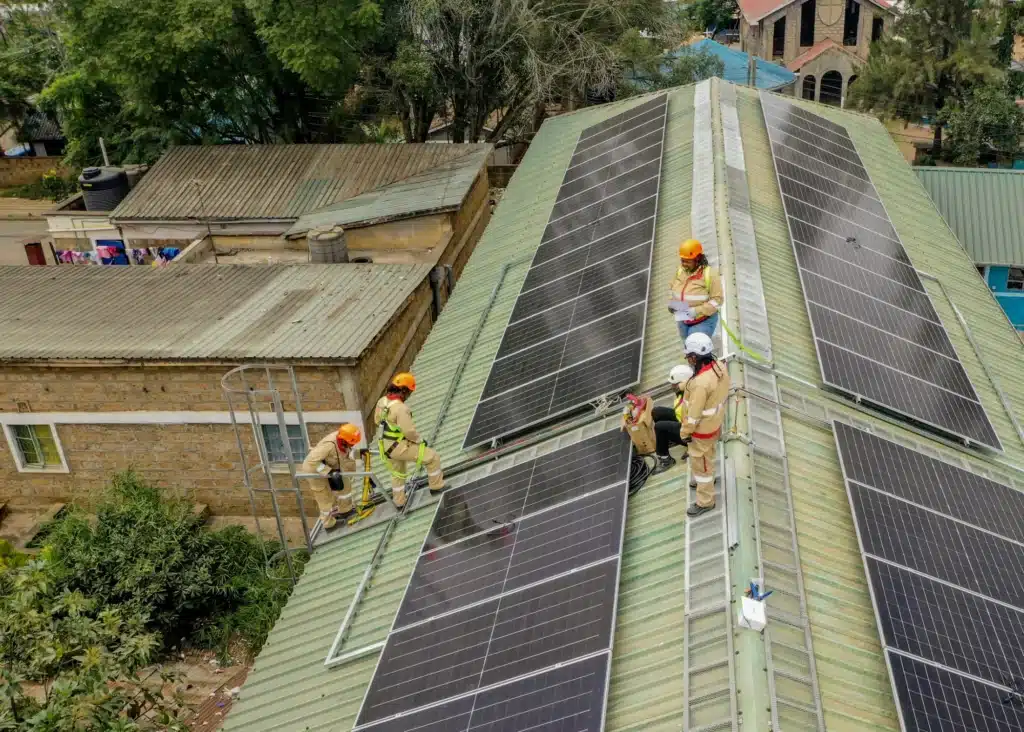
Community Energy Hubs will prioritise energy use for teaching and learning during school hours while enabling revenue-generating services outside of school time. These services may include water pumping, laundry facilities, adult digital literacy classes, and other community-focused activities powered by solar energy systems.
The model is designed to overcome one of the biggest barriers to clean energy deployment: financing. Through a blended finance approach, schools can access renewable energy infrastructure while generating revenue that contributes towards long-term sustainability and asset repayment.

Community Energy Hubs

Collaborative Working

Blended Finance

Revenue-generating services
Collaborative Solutions, Lasting Impact
Working alongside project partners, nine schools located in Nairobi’s informal settlements of Kangemi and Kibera have joined the pilot programme. These schools are not simply beneficiaries; they are active co-creators helping shape the project’s design, technologies, and implementation strategies. School leaders and teachers are also helping test new community business models and revenue-generating activities, providing critical insights that will inform future expansion.
Partner schools are receiving:

Solar photovoltaic (PV) systems

Access to innovative digital planning and impact tools

Support for implementing Kenya’s latest curriculum

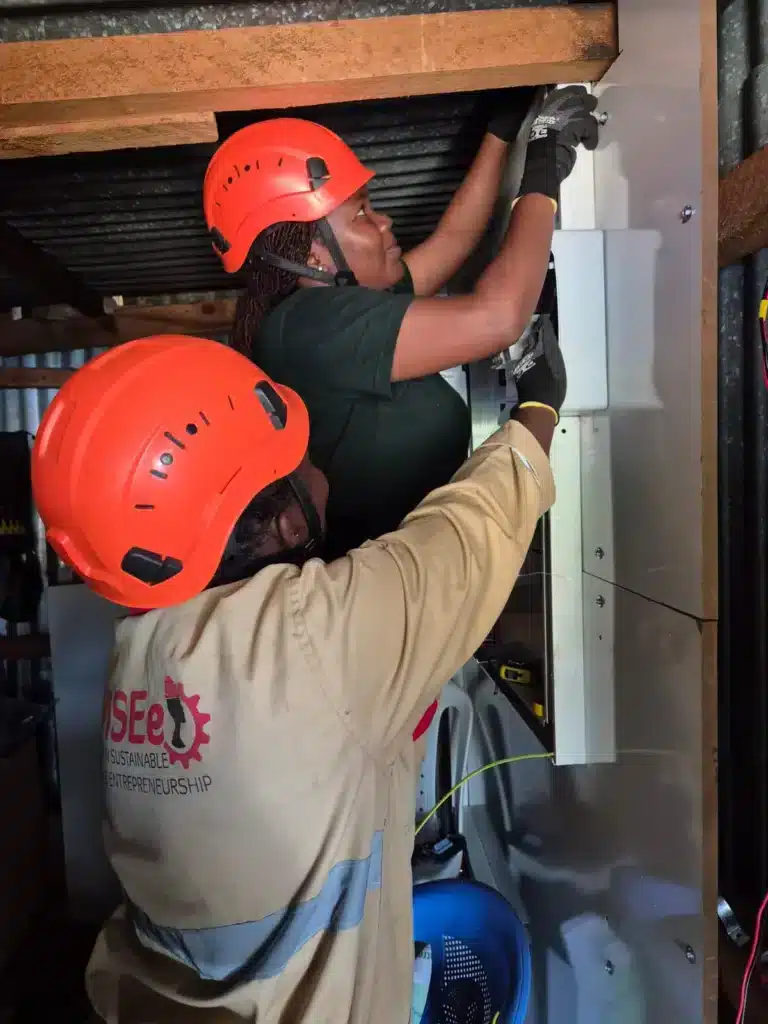
Training in renewable energy technologies

Educational equipment and resources
